

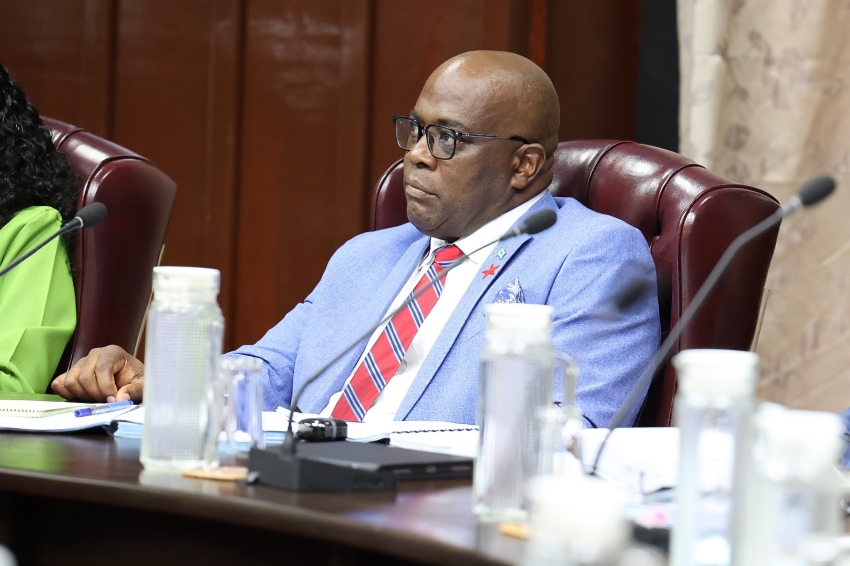
He argued that the budget reflects those principles, stating, “The appropriation 2026-2027 is not just a financial document, it is a statement of intent,” built on “economic growth, fiscal stability… resilient infrastructure, lifelong education and social upliftment.” At its core, he said, “it is about people, putting people first.”
Turning to constituency matters, Estephane highlighted education measures, including government payment of Caribbean Examinations Council fees. “Many parents struggle quietly to ensure their children can sit this exam. Today we are saying to them, you are not alone,” he said. He also welcomed the expansion of the Mathematics Master Teachers Programme and strengthened truancy interventions, noting their importance in keeping young people engaged.
In health care, he described planned universal health coverage legislation as “a game changer… especially our elderly and vulnerable,” providing access “without fear of financial burden.” He added that upgrades to facilities in Babonneau are already under way.
On agriculture, Estephane endorsed the policy direction to “eat what we grow and grow what we eat,” saying it will “empower our farmers, strengthen food security and reduce dependence on imports.”
While commending infrastructure investment, the minister raised concerns about the impact of quarry operations on local roads. “These roads were never designed to withstand vehicles of such axle weight,” he said, warning that communities could face “broken roads and frustrated” conditions unless legislative changes are considered.
He also pointed to the government’s tax amnesty programme as “a gesture of compassion and fairness,” allowing individuals and businesses to regularize outstanding obligations.
Addressing his ministerial portfolio, Estephane reported continued expansion in tourism. He noted that Saint Lucia earned “an estimated $116 million from shared accommodation platforms,” representing a significant year-on-year increase. He further revealed that “122 tourism investment projects were approved, valued at $1.22 billion,” with most investment locally driven and expected to generate more than 2,500 jobs.
“The tourism industry is thriving,” he said, adding that reforms under the Tourism Development Act are improving standards and positioning the island as “a competitive and attractive destination.”
He also outlined ongoing work to modernize tourism transportation, strengthen certification, and improve infrastructure, alongside plans to introduce a tourism satellite account to enhance policy planning.
In the cultural sector, Estephane highlighted continued support for creatives through grants and national events. He confirmed that Saint Lucia’s flower festivals have been submitted for inscription on UNESCO’s intangible cultural heritage list, a move aimed at boosting international recognition.
Concluding his presentation, Estephane said the budget strikes a balance “between compassion and responsibility” and prioritises “fiscal prudence over fiscal profligacy.” For Babonneau, he said, it delivers “opportunity, investment in education, support for our farmers, improved health care… and a better quality of life.”