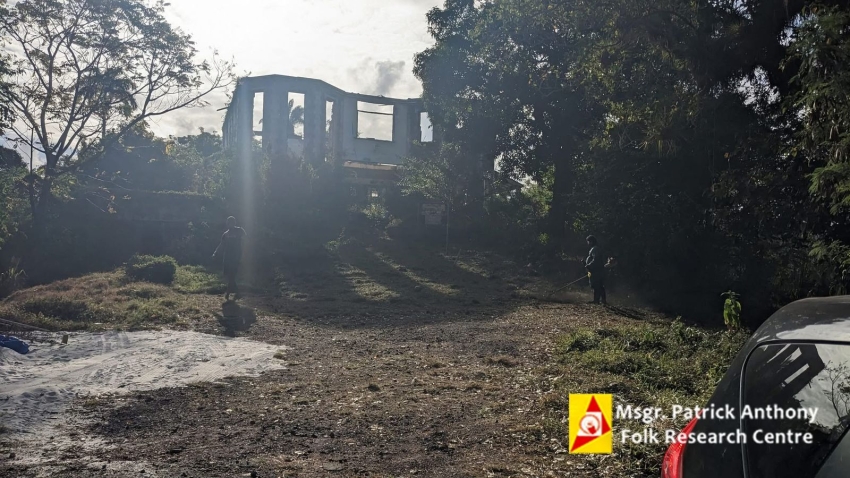
In an interview commemorating the 8th anniversary of the fire, Monsignor Patrick Antony, founder of the FRC indicated that more than 40 years of field research documenting Saint Lucia’s cultural identity, ranging from riddles and folk songs to rare video recordings and archival material. These collections represented a significant body of work chronicling the island’s traditions, language, and lived experiences.
Among the most painful losses are original works linked to renowned artist Sir Dunstan St. Omer, the designer of Saint Lucia’s national flag and one of the country’s most celebrated cultural figures. His contributions formed part of a broader archive that reflected the depth and richness of Saint Lucian heritage.
Despite the devastation, some elements of the country’s cultural record have been preserved. A five-year research collaboration with the University of Vienna, focused on archaeological, historical, and ethnological studies, ensured that portions of the work remain safeguarded overseas, particularly in Italy. Additionally, other documents were stored at the Saint Lucia National Archives, offering a measure of continuity in preserving the nation’s historical memory.
Officials have indicated that steps are already underway to rebuild. There has been approval in principle from planning authorities for a new facility, with assurances that the public will be kept updated as developments progress. The establishment of a National Museum has been reaffirmed as a priority, viewed as a critical institution for safeguarding Saint Lucia’s tangible and intangible heritage.
The tragedy has also exposed a broader issue, the heavy reliance on physical storage and the slow pace of digitisation. Experts have long warned that without modern, digital backup systems, cultural assets remain vulnerable to disasters such as fire, hurricanes, and flooding. Monsignor Antony noted that this slow pace of digitization stemmed from a lack of funding and priority of donors engaged.
In light of these realities, there is growing consensus that preservation efforts must evolve while plans for a permanent museum facility take shape and funding is secured.
A digital, interactive museum space could be established in the interim allowing for the collection, digitisation, and public sharing of materials while a physical building is being developed.
Such an approach would not only protect what remains but also ensure that Saint Lucia’s cultural legacy continues to be accessible, resilient, and preserved for future generations.